
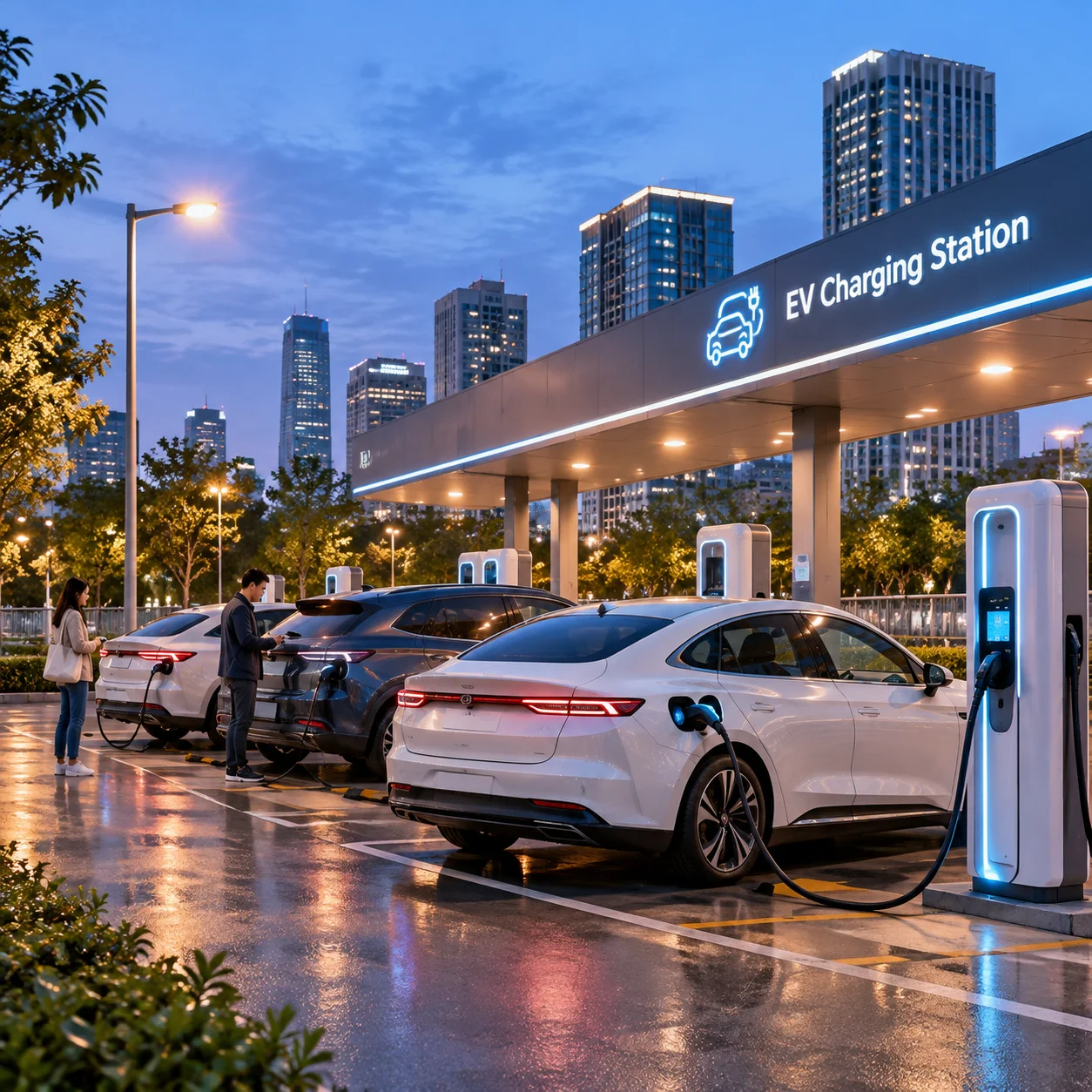
Understanding charging congestion
Charging infrastructure must serve changing demand throughout the day. Peak hub queuing delays, uneven grid loads, and the capacity of multi-port hubs are central to the infrastructure discussion highlighted in this research overview.
Peak demand and waiting times
A charging hub can have spare capacity during quiet periods and still develop queues when vehicles arrive together. Planning needs to consider arrival patterns, charging session duration, and the number of usable connectors alongside the advertised maximum power.
Grid load and shared power
Multiple connectors may share a limited site power budget. When several vehicles charge at once, the available power must be distributed between them. Assessing the grid connection and simultaneous demand helps explain why adding connectors alone may not resolve congestion.
Planning high-capacity multi-port hubs
Useful planning questions include how power is allocated between active ports, how equipment availability is monitored, and how drivers find an available connector. Evaluating these factors together supports a more practical approach to hub capacity and peak-period demand.